LSA
DATE
2024
ROLE
UX LEAD
WITH
LETSSTOPAIDS
LETSSTOPAIDS (LSA) IS CANADA'S LARGEST YOUTH-HIV CHARITY, WITH A MISSION TO SPREAD KNOWLEDGE ON HIV PREVENTION AND YOUTH LEADERSHIP.
LSA
DATE
2024
ROLE
UX LEAD
WITH
LETSSTOPAIDS
LETSSTOPAIDS (LSA) IS CANADA'S LARGEST YOUTH-HIV CHARITY, WITH A MISSION TO SPREAD KNOWLEDGE ON HIV PREVENTION AND YOUTH LEADERSHIP.
This was a large scale project.
This was a large scale project.
This was a large scale project.
Instead of walking you through the entire scope — , I'll showcase how we tackled one of our key challenges — optimizing donations
Instead of walking you through the entire scope — , I'll showcase how we tackled one of our key challenges — optimizing donations
INTRODUCTION
INTRODUCTION
As LetsStopAIDS’ digital platform grew, donation engagement lagged behind.
As LetsStopAIDS’ digital platform grew, donation engagement lagged behind.
Donations directly support youth-led HIV prevention programs, global partnerships, and education initiatives, making the digital giving journey a critical organizational touchpoint.
Yet increasing traffic did not translate into consistent donation behaviour.
Donations directly support youth-led HIV prevention programs, global partnerships, and education initiatives, making the digital giving journey a critical organizational touchpoint.
Yet increasing traffic did not translate into consistent donation behaviour.
MISSION & VISION
MISSION & VISION
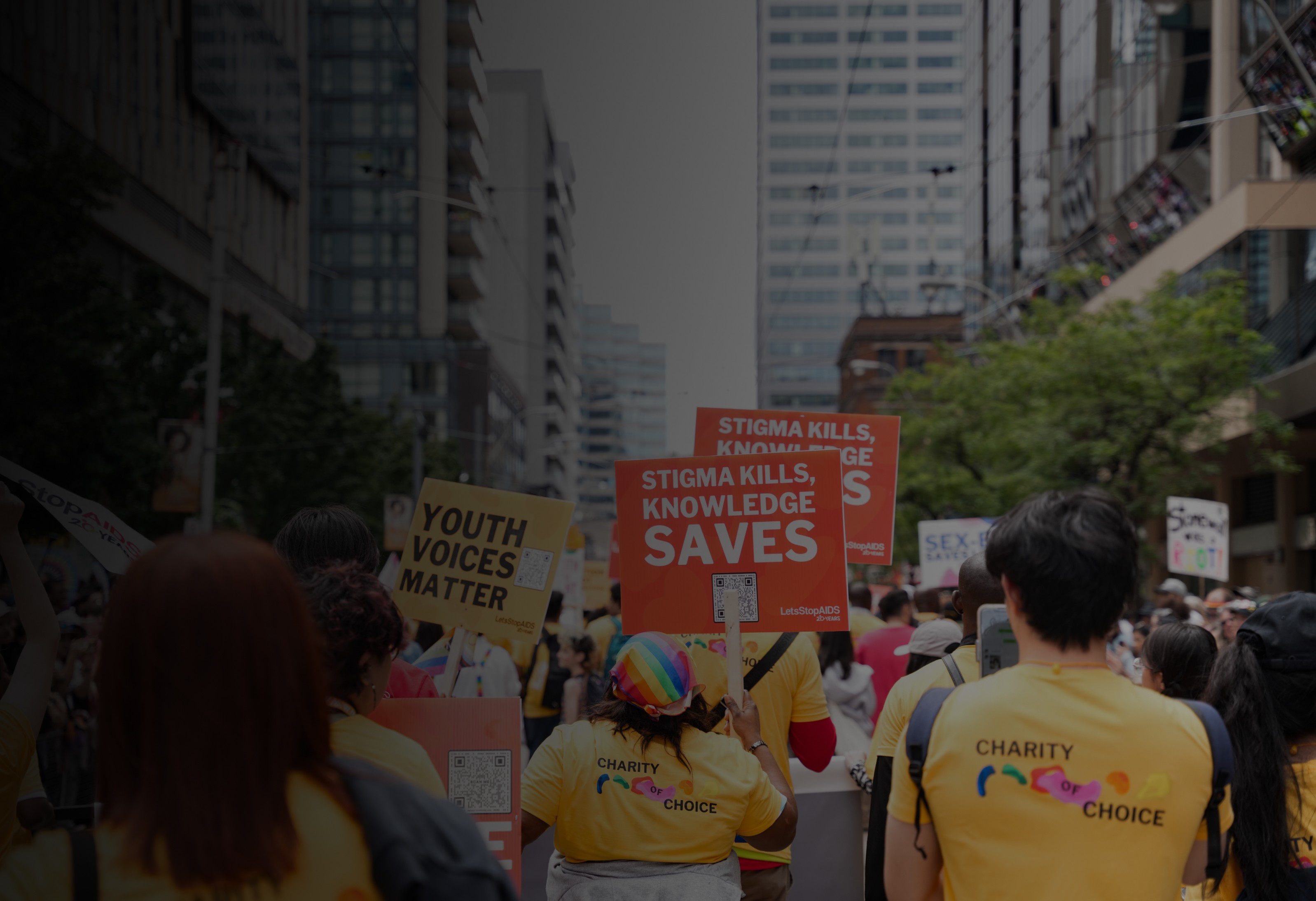
LetsStopAIDS envisions a future with zero new HIV transmissions.
LetsStopAIDS envisions a future with zero new HIV transmissions.
LetsStopAIDS envisions a future with zero new HIV transmissions.
Igniting movement of young leaders dedicated to shaping a healthier, brighter future because we believe youth are key to the HIV response.
Igniting movement of young leaders dedicated to shaping a healthier, brighter future because we believe youth are key to the HIV response.
DISCOVERY
DISCOVERY
Less than 5% of users were completing their donation journey.
Less than 5% of users were completing their donation journey.
Less than 5% of users were completing their donation journey.
Donations directly support youth-led HIV prevention programs, global partnerships, and education initiatives, making the digital giving journey a critical organizational touchpoint.
Yet increasing traffic did not translate into consistent donation behaviour. Donation pathways showed notable drop-off, indicating users were entering the experience but not completing donations.
Donations directly support youth-led HIV prevention programs, global partnerships, and education initiatives, making the digital giving journey a critical organizational touchpoint.
Yet increasing traffic did not translate into consistent donation behaviour. Donation pathways showed notable drop-off, indicating users were entering the experience but not completing donations.
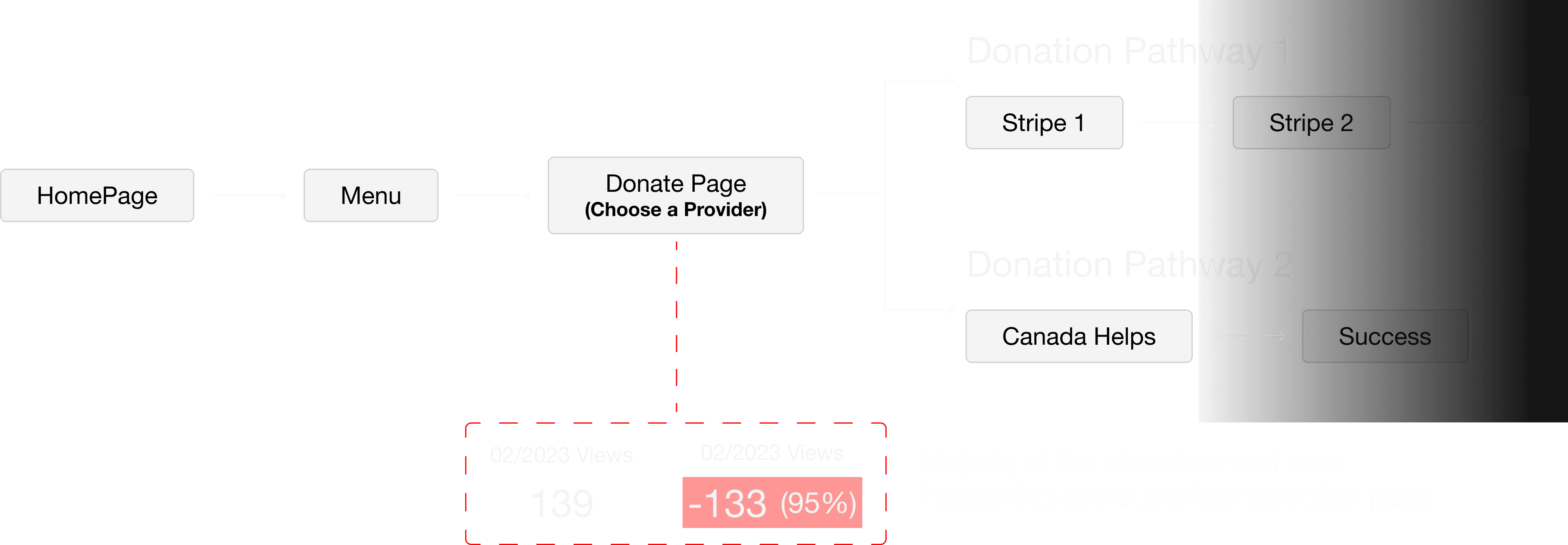
So, how was the experience hindering donation completion?
So, how was the experience hindering donation completion?
So, how was the experience hindering donation completion?
Old Donations Page
Old Donations Page
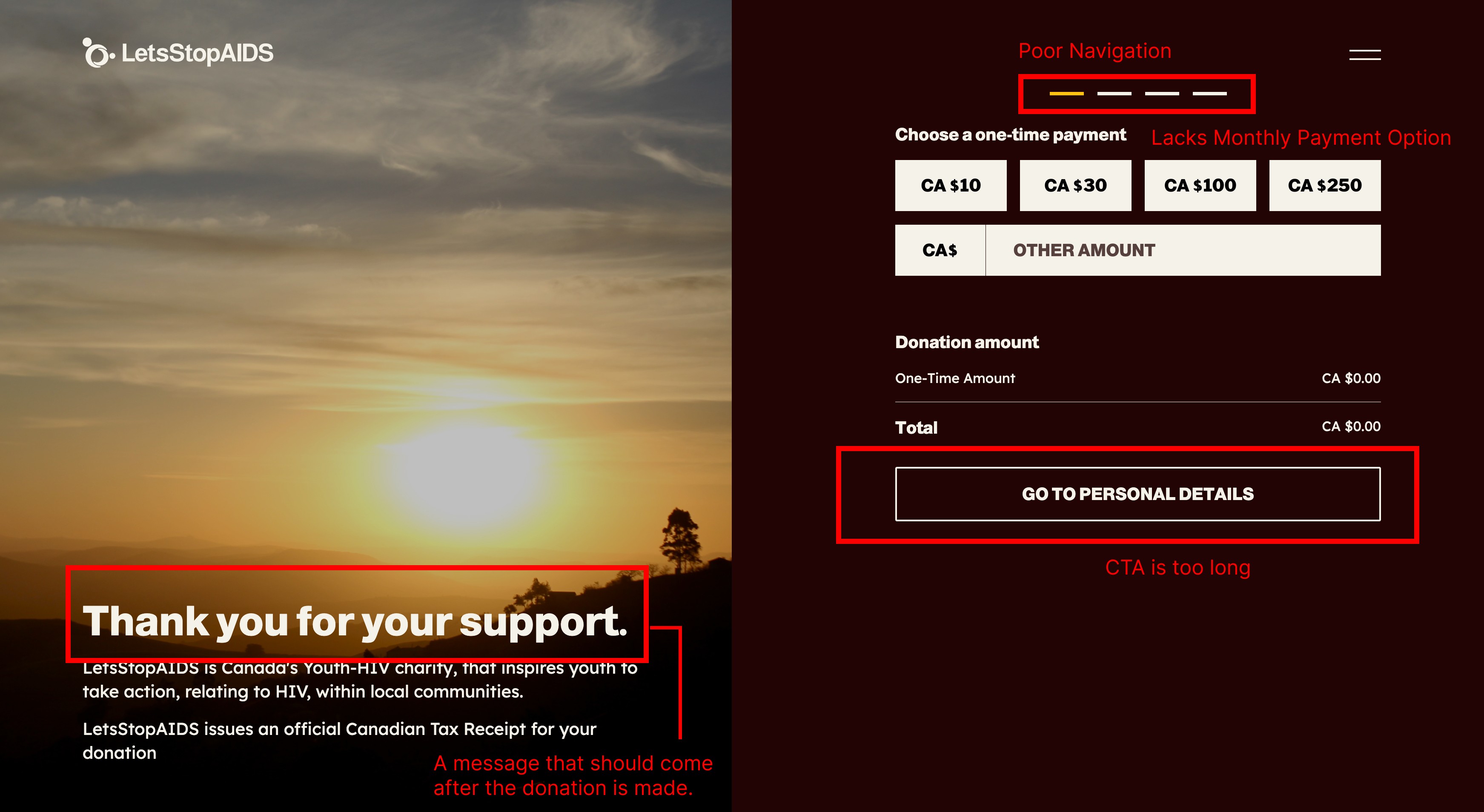
Weak affordances
Weak affordances
Long CTAs
Unclear back Button
Inability to return to donation journey
Long CTAs
Unclear back Button
Inability to return to donation journey

Unclear required fields
Unclear required fields
No indication of mandatory input fields
No indication of mandatory input fields

Fragmented Input Fields
Fragmented Input Fields

Premature feedback messaging
Premature feedback messaging
Premature gratitude messaging
Premature gratitude messaging
Resulting in:
Resulting in:
Resulting in:
Reduces scan-ability
Increases steps for users to complete the donation
Reduced interactive confidence and poor user control within flow
Mismatch between system feedback and user progress.
Reduces scan-ability
Increases steps for users to complete the donation
Reduced interactive confidence and poor user control within flow
Mismatch between system feedback and user progress.
What were our potential donors saying
What were our potential donors saying
What were our potential donors saying
Understanding donor expectations, motivations, and sources of hesitation through interviews.
Financial Confidence &
Tax Clarity
Financial Confidence & Tax Clarity
clear communication around receipt issuance and eligibility criteria
clear communication around receipt issuance and eligibility criteria
participants raised questions related to official donation receipts and their use for tax reporting purposes
participants raised questions related to official donation receipts and their use for tax reporting purposes
Trust & Organizational Credibility
Trust & Organizational Credibility
Understand how initiatives evolve and generate impact
Understand how initiatives evolve and generate impact
Clearer visibility into organizational progress and outcomes over time.
Clearer visibility into organizational progress and outcomes over time.
Impact clarity
Impact clarity
Greater transparency regarding how donations are allocated.
Greater transparency regarding how donations are allocated.
Donors sought reassurance that contributions directly supported meaningful initiatives and expressed interest in clearer explanations of funding distribution.
Donors sought reassurance that contributions directly supported meaningful initiatives and expressed interest in clearer explanations of funding distribution.
Access to Donation Page
Access to Donation Page
Noted difficulty locating donation entry points during their browsing journeys
Noted difficulty locating donation entry points during their browsing journeys
Donation opportunities should remain consistently accessible rather than confined to dedicated pages
Donation opportunities should remain consistently accessible rather than confined to dedicated pages

How do other organizations support their donors?
How do other organizations support their donors?
How do other organizations support their donors?



Trust Reinforcement Signals
Trust Reinforcement Signals
Donation security FAQ & Answer
Using industry standard SSL technology
Partnership with stripe
Partnership with reCAPTCHA
Multiple use of storytelling and impact telling
Donation security FAQ & Answer
Using industry standard SSL technology
Partnership with stripe
Partnership with reCAPTCHA
Multiple use of storytelling and impact telling
Access to Donating
Access to Donating
Multiple donation entry points
Home, About, Work, Events, News, etc.
Always accessible through navigation bar
Donation opportunities should remain consistently accessible rather than confined to dedicated pages
Membership program option
Wire transfer option
Multiple donation entry points
Home, About, Work, Events, News, etc.
Always accessible through navigation bar
Donation opportunities should remain consistently accessible rather than confined to dedicated pages
Membership program option
Wire transfer option
Impact Transparency
Impact Transparency
Explanation on what donation funds are used for
Alternative ways to make an impact
Ability to “See our work”, “See campaigns” “See latest news’
Emotional drive
Explanation on what donation funds are used for
Alternative ways to make an impact
Ability to “See our work”, “See campaigns” “See latest news’
Emotional drive
STRATEGY
STRATEGY
Next: Design direction
Next: Design direction
Hover to View
Tap to View

User Needs
Early decision points and fragmented form interactions introduced unnecessary cognitive load.
Key Design Decisions
Remove initial donation provider selection step
Identify required form fields
Reduce number of steps required to complete donation
User Needs
Early decision points and fragmented form interactions introduced unnecessary cognitive load.
Key Design Decisions
Remove initial donation provider selection step
Identify required form fields
Reduce number of steps required to complete donation

User Needs
Users showcased wanted to donate when they felt clarity to the content they were viewing.
Key Design Decisions
Simplify interface, improve feedback loops
Add program context and storytelling elements
Provide clear explanation of where funds go to reinforce transparency
User Needs
Users showcased wanted to donate when they felt clarity to the content they were viewing.
Key Design Decisions
Simplify interface, improve feedback loops
Add program context and storytelling elements
Provide clear explanation of where funds go to reinforce transparency

User Needs
Donors wanted reassurance around payment security and clarity about official tax receipts.
Key Design Decisions
Clear messaging around official tax receipt
Security and payment reassurance signals throughout donation journey
Improved system states with users incentive to keep moving forward.
User Needs
Donors wanted reassurance around payment security and clarity about official tax receipts.
Key Design Decisions
Clear messaging around official tax receipt
Security and payment reassurance signals throughout donation journey
Improved system states with users incentive to keep moving forward.

User Needs
To understand how their contributions would be used
Key Design Decisions
Add “Donate” CTA in the main navigation
Embedded donation entry points across impact stories and program pages
Maintain donation access in the footer
User Needs
To understand how their contributions would be used
Key Design Decisions
Add “Donate” CTA in the main navigation
Embedded donation entry points across impact stories and program pages
Maintain donation access in the footer
IDEATION
IDEATION
Funnel users to donate (through quantity & quality).
Funnel users to donate (through quantity & quality).
Funnel users to donate (through quantity & quality).
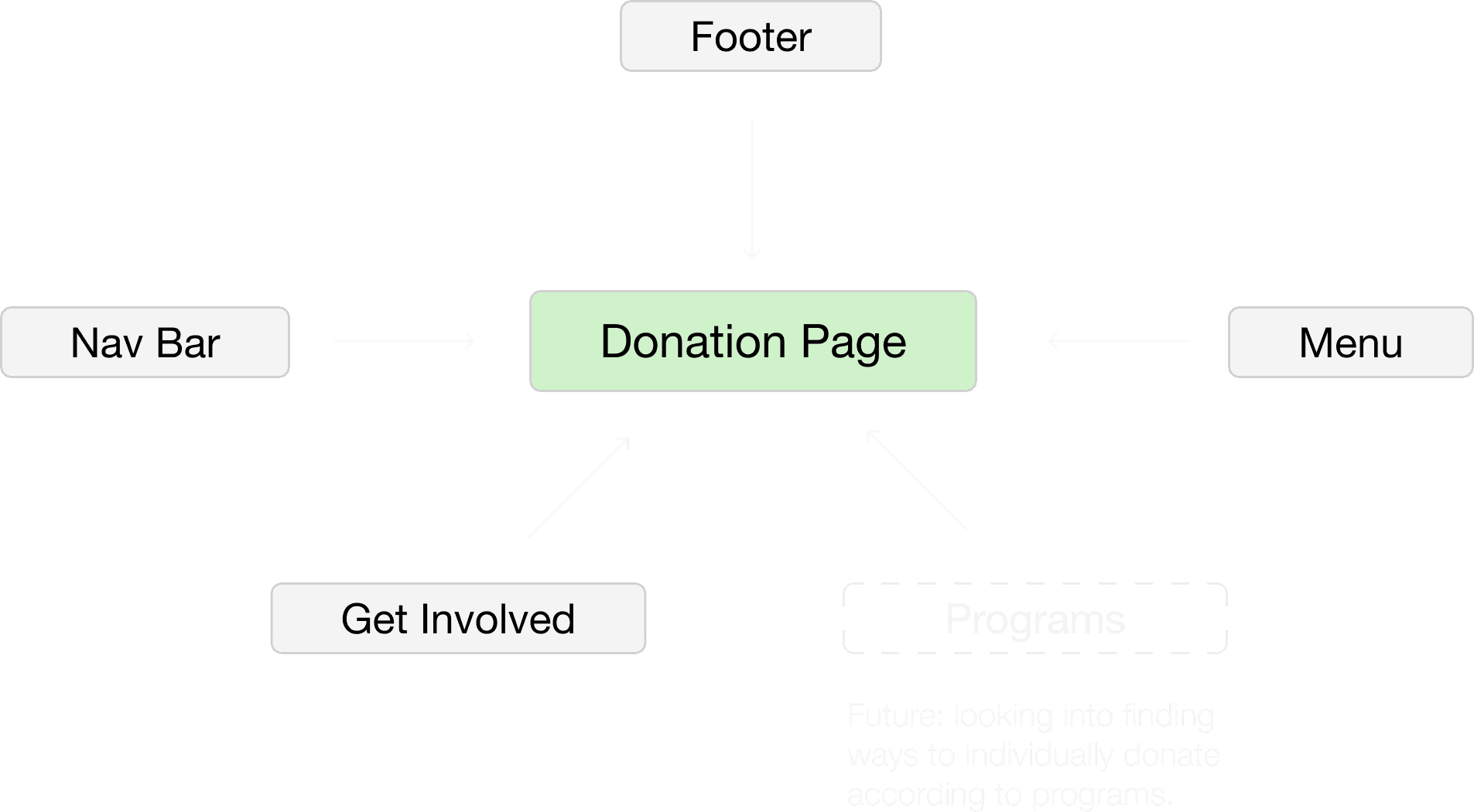
Quantity $$$$$
Increased the entry points by 3x, and by adding a CTA to the navigation bar, it allows access at all times.
Increased the entry points by 3x, and by adding a CTA to the navigation bar, it allows access at all times.
Quality 💰
Adding CTAs near our programming and getting involved so donors feel emotionally pulled to donate.
Adding CTAs near our programming and getting involved so donors feel emotionally pulled to donate.
A simplified, yet optimized flow.
A simplified, yet optimized flow.
A simplified, yet optimized flow.
Old Flow
Old Flow
Old Flow

Current Flow
Current Flow
Current Flow

FINAL DESIGNS & SOLUTIONS
Standardized Donation Design
Standardized Donation Design
Removed 3rd party donations.
Addition of Apple & Google Pay.
Donation security hierarchy.
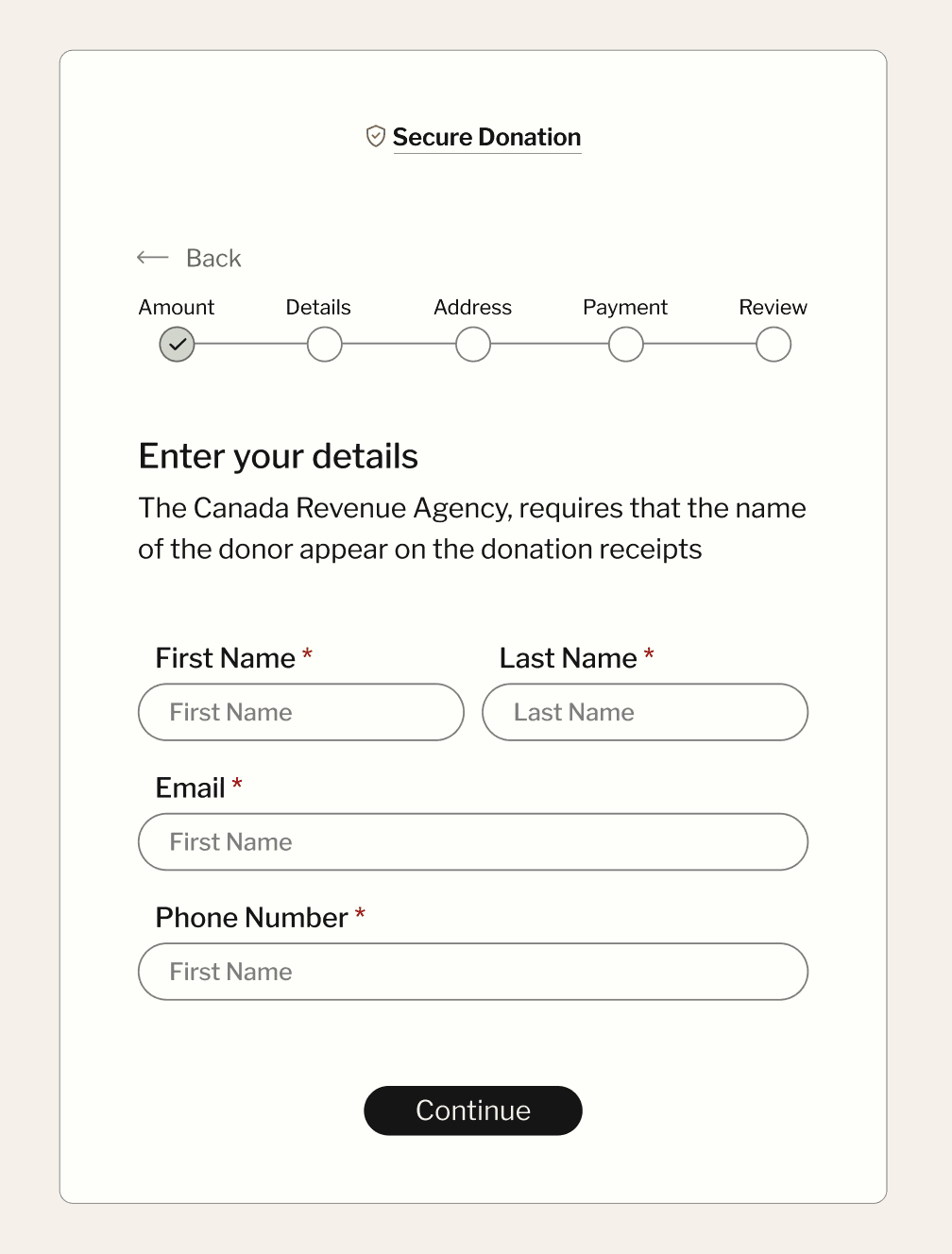
Improved User Flow
Improved User Flow
Clear step-by-step of user journey.
Addition of mandatory input fields.
Focus on guided journeys
Focus on guided journeys
Clear CTAs.
State transitions and donation prompting.
Currency options.
Increased user control on donation allocation.
REFLECTION & SUCCESS METRICS
This project reinforces the importance of trust, clarity, and emotional reassurance within financial decision-making experiences, and the need to balance visual engagement with usability, accessibility, and conversion-focused product thinking.
Through internal stakeholder reviews and usability feedback, we have seen improvements in user clarity, trust and confidence, navigation and overall ease of use, and reduced hesitation during high-intent actions.