Munich Youth Force
Project Type
Web
Deliverables
Web Design, Articles, UI Library, Branding, Development
Role
UX Lead, UI Designer, Creative Lead
Project Brief
The main objective of this project was to ensure the digital platform served young attendees and stakeholders by providing event information, registration details, programme schedules, resources and engagement opportunities.
The aim was to identify the content for youth, ensure accessibility and to offer actionable recommendations that could enhance the user experience for future conferences.
Goals & Objectives
Gauge the effectiveness of content in engaging youth, providing valuable resources, and promoting conference events and goals
Assess the website’s accessibility and inclusivity, ensuring it caters to diverse users, including those with varying technical abilities and disabilities.
Identify and address the key pain points faced by users in finding relevant information, registration, navigation, and provide solutions.
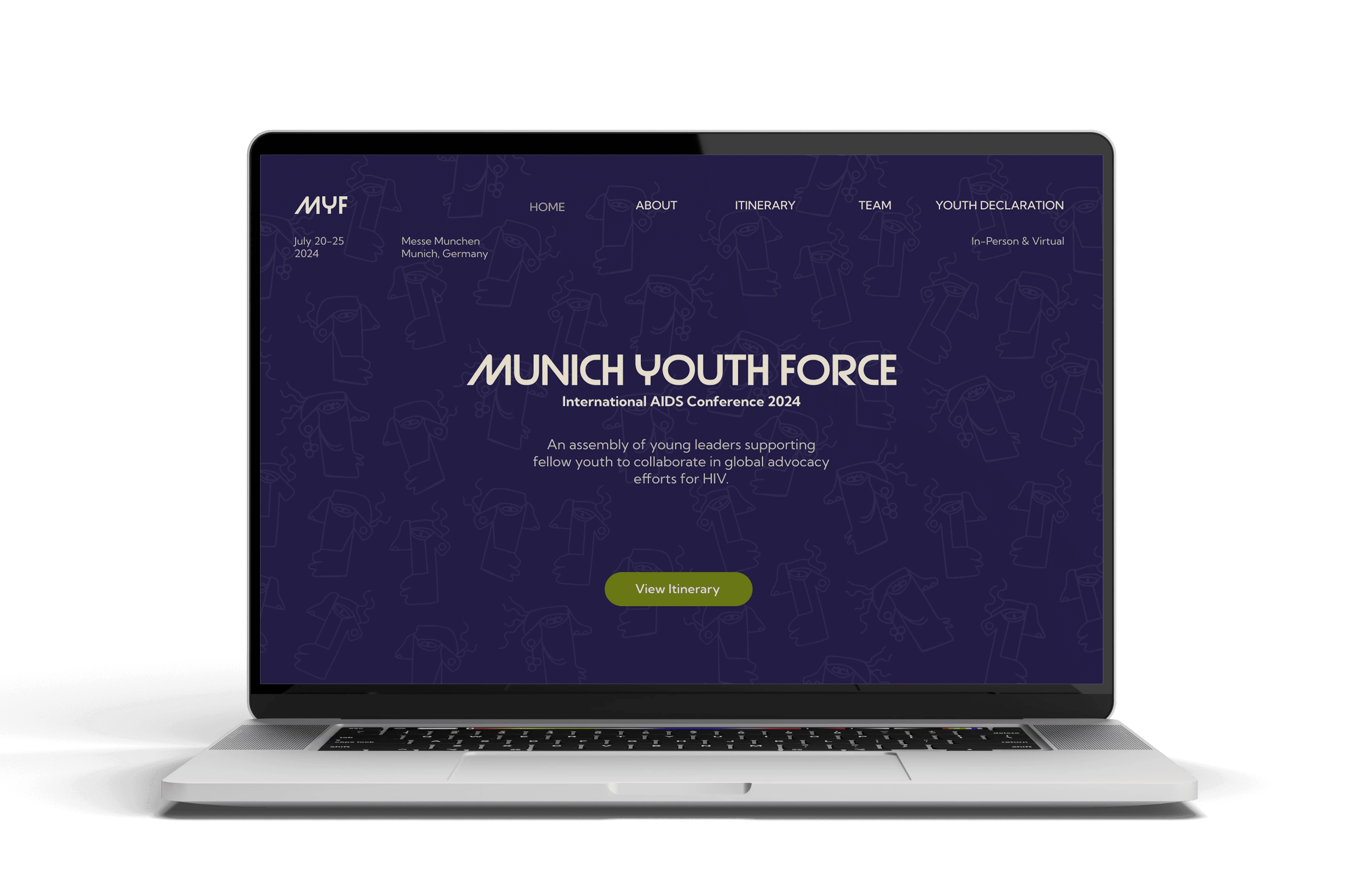
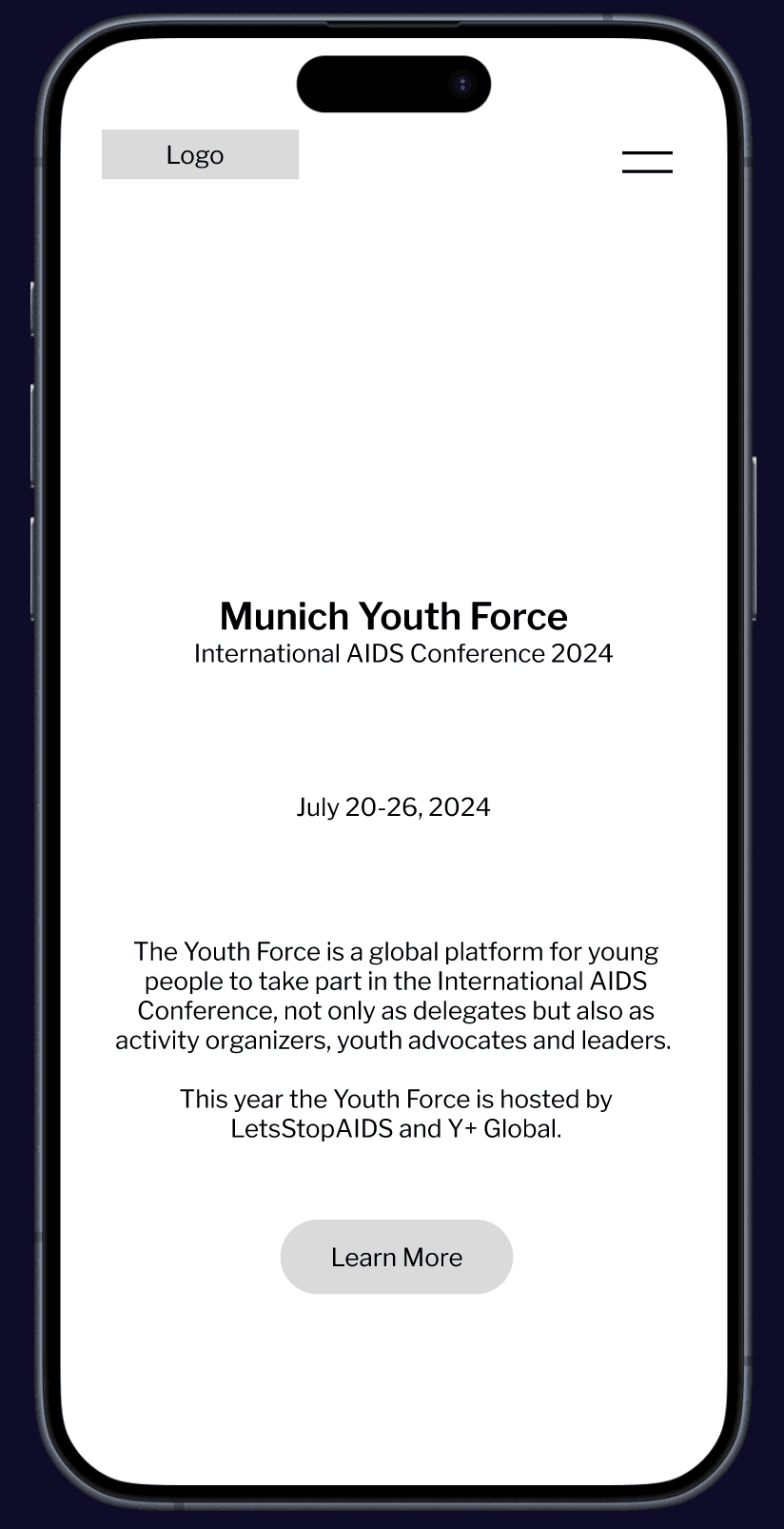
Munich Youth Force - Website Hero
User Research
Getting to know our User
Within the youth target audience, the two user personas adopted from our reserached were former delegates and first-time conference attendees.
I wanted to enhance the experience from past attendees, while also gathering fresh perspectives to improve the design, content and experience.
Faith Kamau, 26
“I believe in building a better future, where health conditions do not define someone’s worth or potential.”


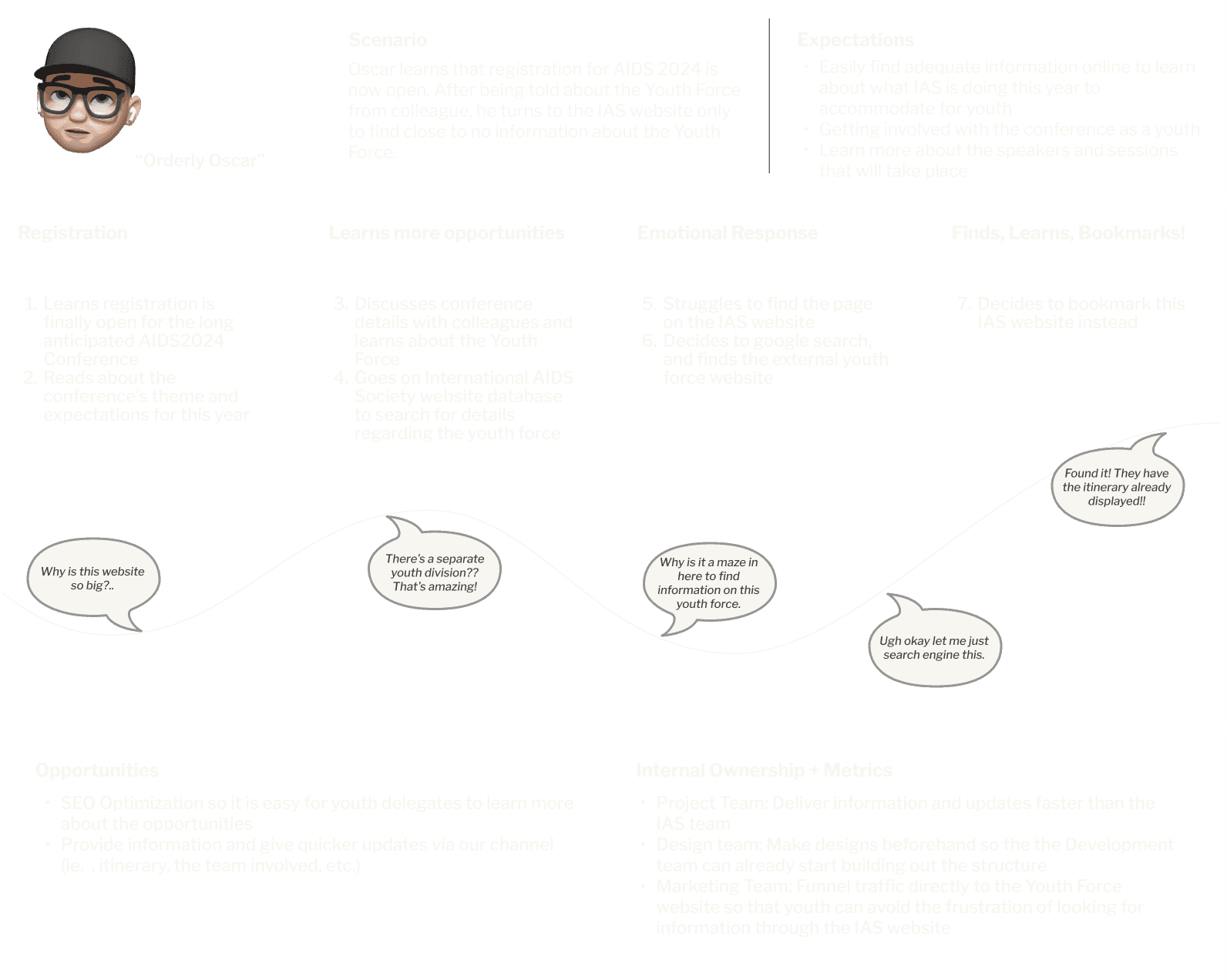
Oscar Davies, 26
“I normally thrive while meeting new people, so as a first-time conference attendee, I’m excited to network, and get to build connections.”

Key Opportunities:
Provide updates faster than any other channel
Centralize the information and opportunities for youth related activities at the conference
Needs
Event Itinerary
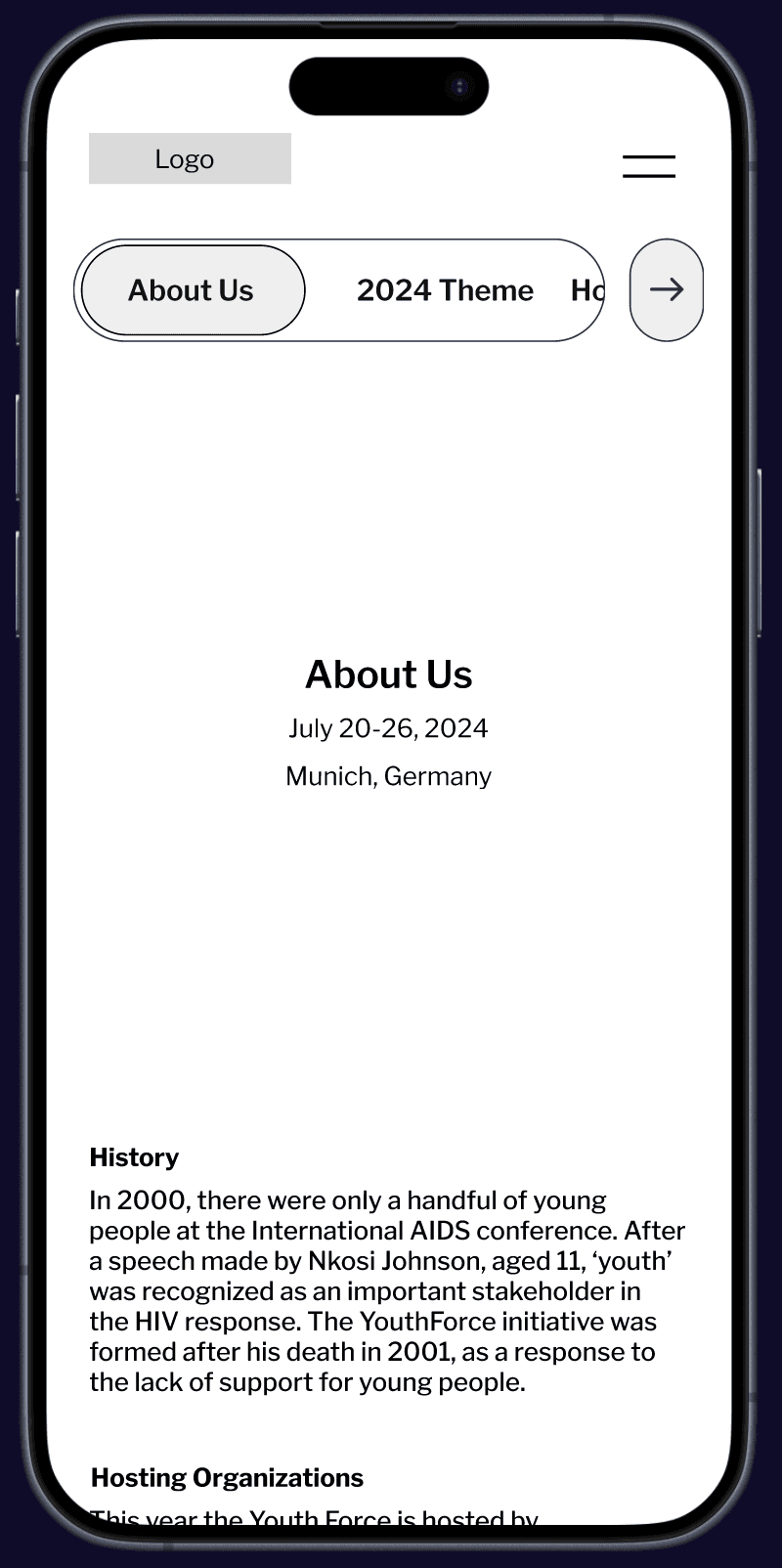
Overview of the Event (About)
Logistics (Time, Date, Location)
Wants
FAQ guideline
Youth Friendly design
PainPoints
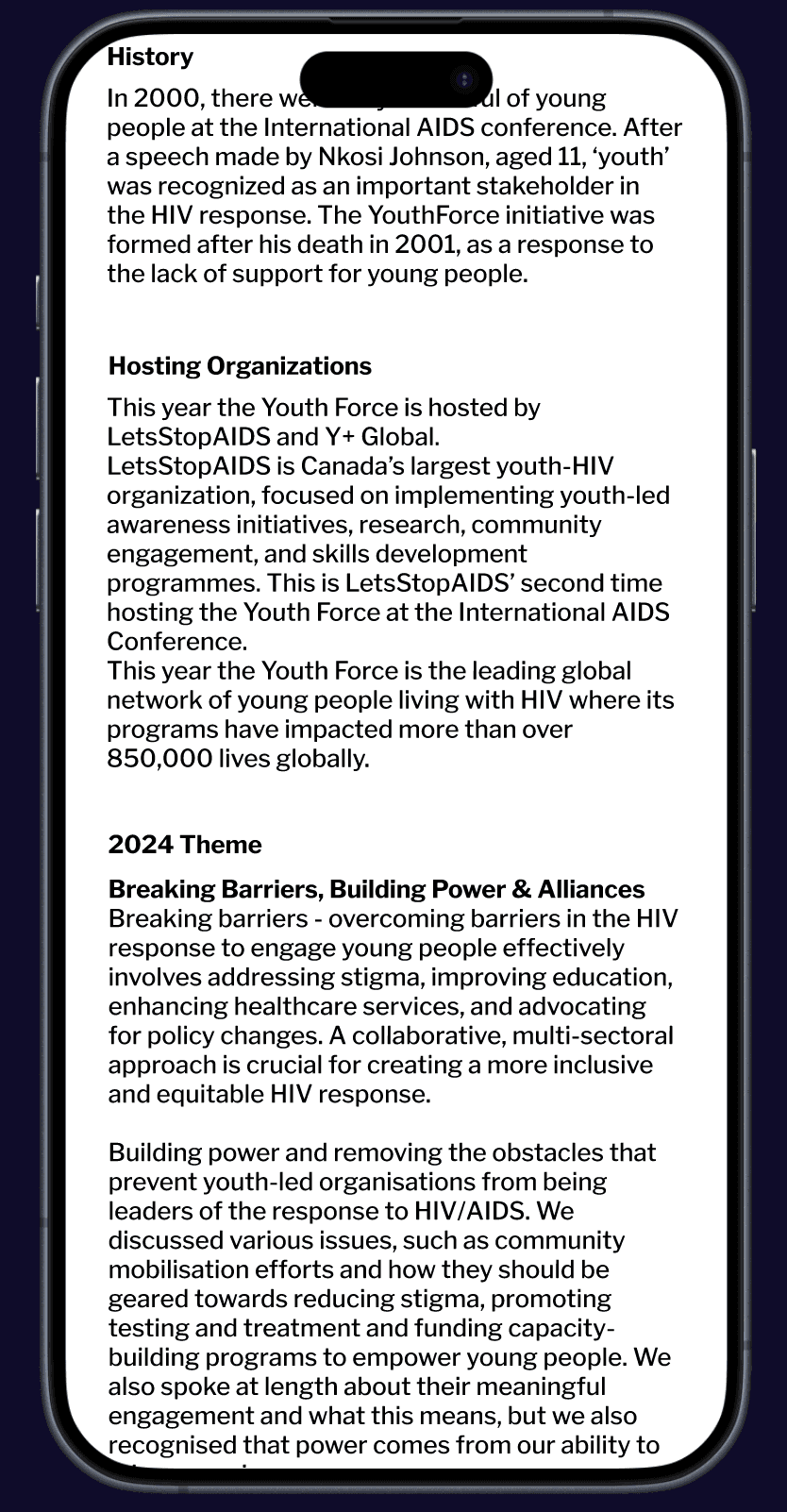
Difficulty understanding event explanation
Difficulties with Navigation
Overwhelming amount of content
Overall Insights
Prioritization of key information
Create a youth centric design and accessibility


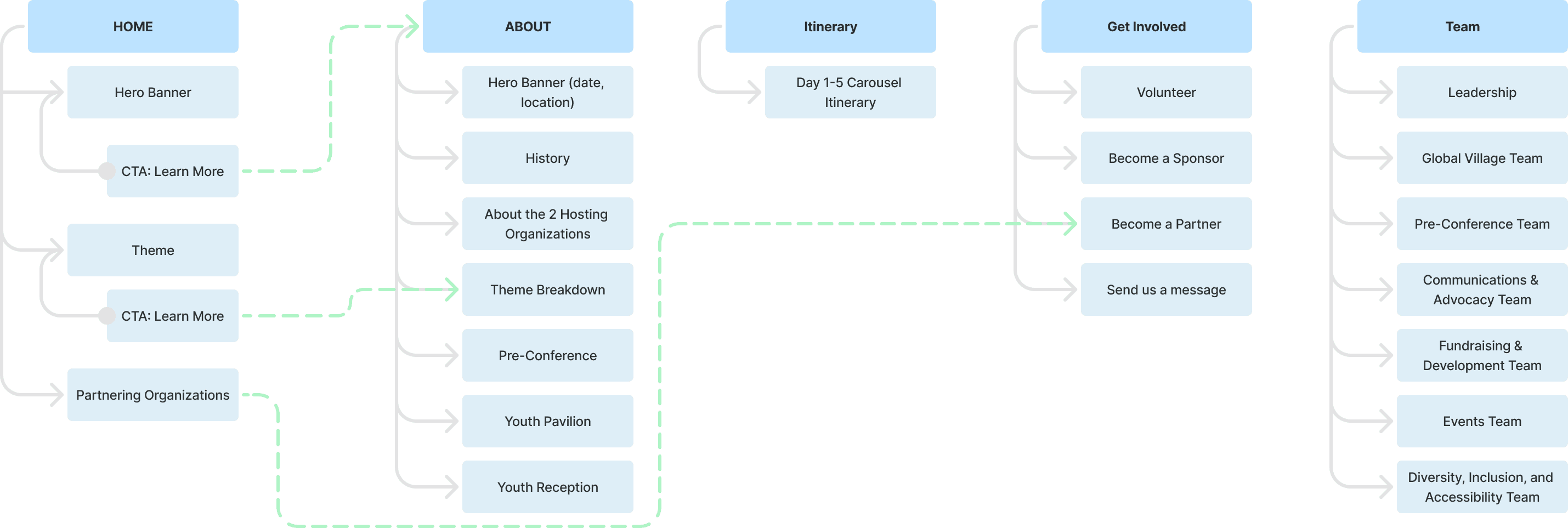
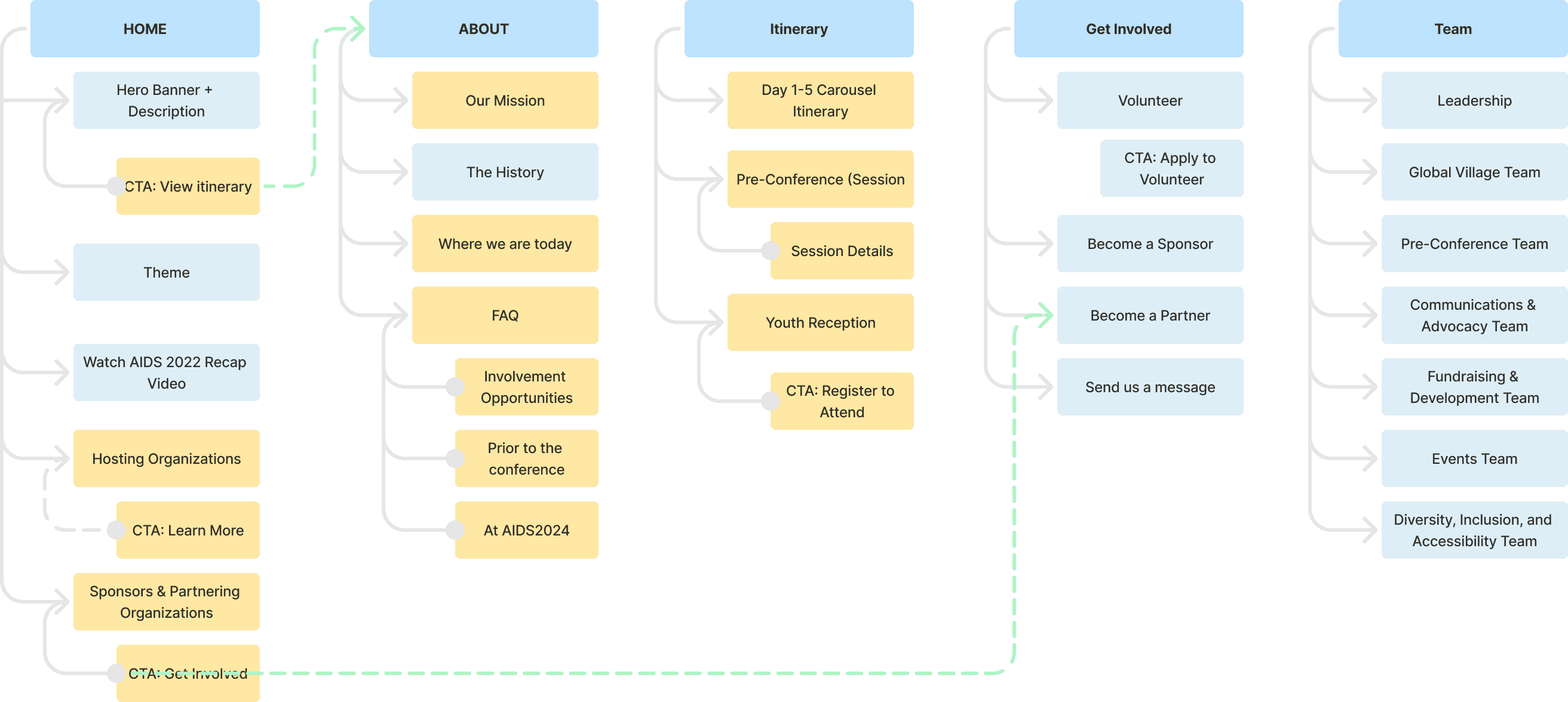
SiteMap

Iterations
Usability Tests from Prototypes
We conducted both mobile and desktop usability tests to see if our designs were intuitive, navigation was simple, and accessible.
Key Findings:
Platform is not inuitive
Text Heavy: ⚠️cognitive overload
Unable to differentiate between the mission and the theme
“The website has all the information I require, however I believe there's scope to make it more user-friendly”

Opportunities
Provide updates faster than any other channel
Centralize the information and opportunities for youth related activities at the conference
Takeaways
This is my fourth conference website project, and it has been a valuable learning experience. Despite initial assumptions about intuitive design, user testing has consistently highlighted the importance of understanding and addressing evolving user needs. These insights have guided me in refining the user experience to ensure it meets the needs of our diverse audience effectively.
The website served as a key element in the broader communications strategy for a project of this scale, centralizing essential information such as the conference agenda, speaker details, and the contributions of the Youth Force network. This approach helped streamline access and engagement for all stakeholders.
In the global health sector, marginalized and key populations are often overlooked. One of my primary goals for this project was to bring innovation to the design process, ensuring that these groups had a clear and accessible pathway to important information. As a result of my work on the Youth Force initiative, over 200 youth gained early access to critical resources, and the Youth Force saw the highest number of volunteer applications across the entire Global Village. This success underscores the importance of continuously revisiting user needs and adapting the design to maximize impact.